

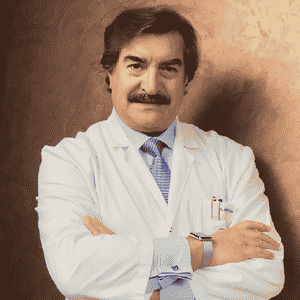
Miguel B. Royo-Salvador
Institut Chiari & Siringomielia & Escoliosis de Barcelona, SpainPresentation Title:
Conus medullaris level in mammals as a basis for Filum Disease in humans
Abstract
Background: Filum Disease (FD) is hypothesized to result from pathological mechanical traction exerted by an abnormally tense filum terminale on the central nervous system, arising from asynchronous growth between the spinal cord and the vertebral column. While this conflict is well described mechanically, its evolutionary and phylogenetic origins remain unaddressed.
Objective: To examine the position of the conus medullaris and the structural role of the filum terminale across mammalian species, in order to identify evolutionary factors that may predispose humans to FD.
Methods: A comparative anatomical analysis was conducted across vertebrate species, with particular focus on mammals, primates, and hominids, examining conus medullaris position relative to vertebral column length, filum terminale structure, and species-specific morphological adaptations.
Results: Four phylogenetic factors were identified as potentially contributing to the growth asynchrony underlying FD in humans: (1) anatomical adaptations to the evolutionary enlargement of the lower body; (2) the type of nerve and muscle fibers associated with caudal regression; (3) dedifferentiation, atrophy, and structural transformation of the caudal spinal cord coinciding with tail disappearance; and (4) the biomechanical consequences of bipedalism. Across species, conus medullaris position is observed to be lower and the filum terminale shorter in less evolutionarily derived species, suggesting that the mechanical tension predisposing to FD is a distinctly hominid trait.
Conclusions: The comparative anatomical and phylogenetic evidence presented suggests that four factors — lower hemibody enlargement, nerve and muscle fibre composition, tail disappearance, and the shift to bipedalism — may have progressively influenced the cranial ascent of the conus medullaris across mammalian evolution, with its most pronounced expression in Hominidae. These phenomena are hypothesized to have generated the neuroaxis-spine-filum terminale conflict underlying FD, which, under this framework, is not an exceptional pathology but a consequence of phylogenetic adaptation present to varying degrees in all humans.
Biography
Miguel B. Royo Salvador, born in 1950 in Zaragoza (Spain), graduated in Medicine and Surgery from the University of Barcelona’s School of Medicine in 1974. He specialized in Neurosurgery and Neurology in 1978 and earned his doctorate ‘cum laude’ from the Autonomous University of Barcelona in 1993. With over forty years of research, he has studied the etiological connection of conditions like Arnold Chiari I syndrome, idiopathic Syringomyelia, and idiopathic Scoliosis. As head of the Institut Chiari & Syringomyelia & Scoliosis de Barcelona, he promotes the Filum System through research, clinical practice, international conferences, and specialist training.

Organization Location
1309 Coffeen Avenue, STE 1200, Sheridan, Wyoming 82801, USA
General Enquiry
contact@scientexconferences.com
Finance Enquiry
finance@scientexconferences.com
Call us at
USA : (+1) 515 993-9155